

Stocks Sink on Jobs, War, Credit Woes as Oil Jumps: Markets Wrap

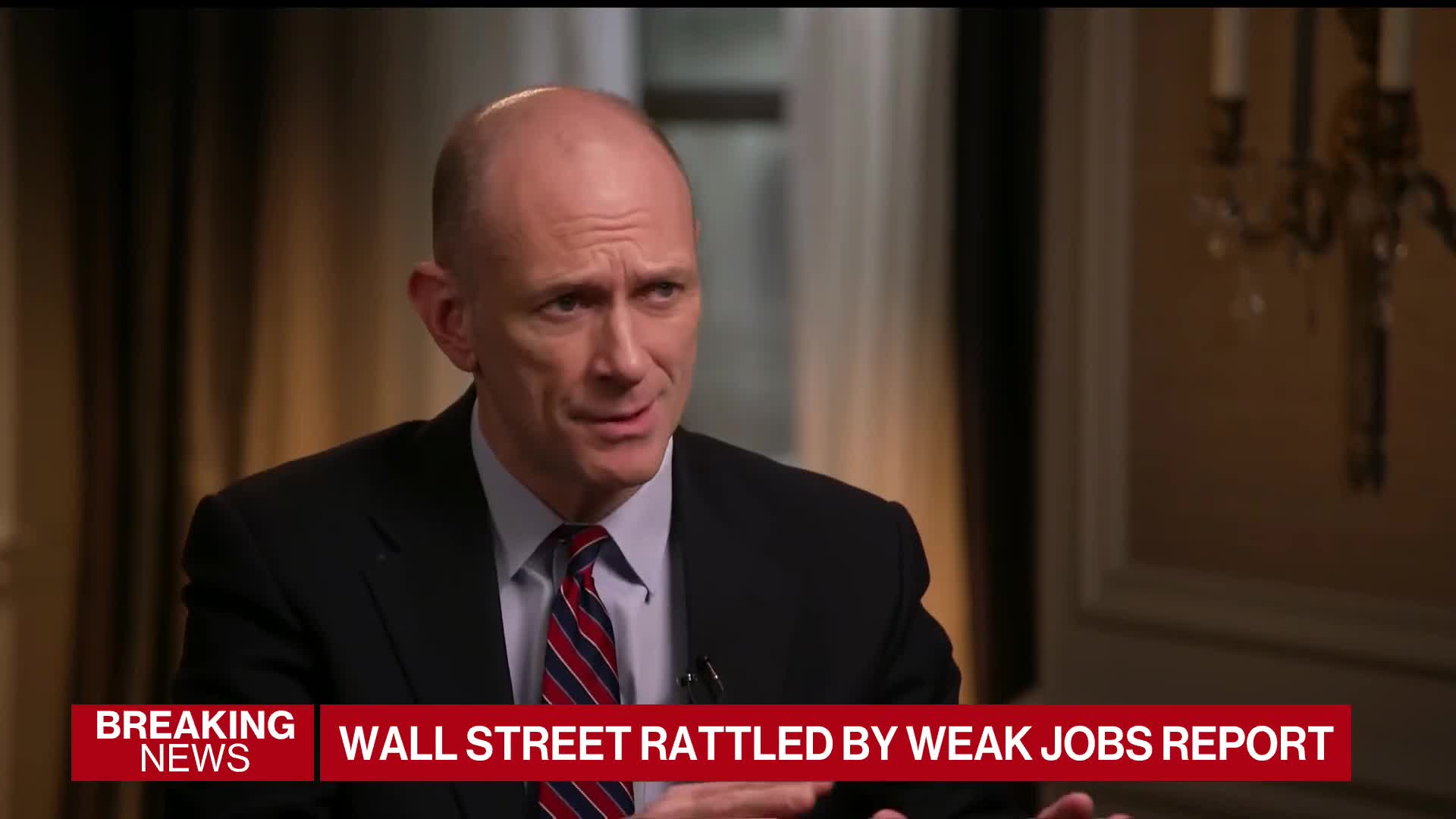
(Bloomberg) -- A weak jobs report hit stocks at a time when a widening war in the Middle East is lifting oil prices and fueling inflation jitters. Renewed anxiety about the private-credit industry also curbed risk appetite. Bonds whipsawed.
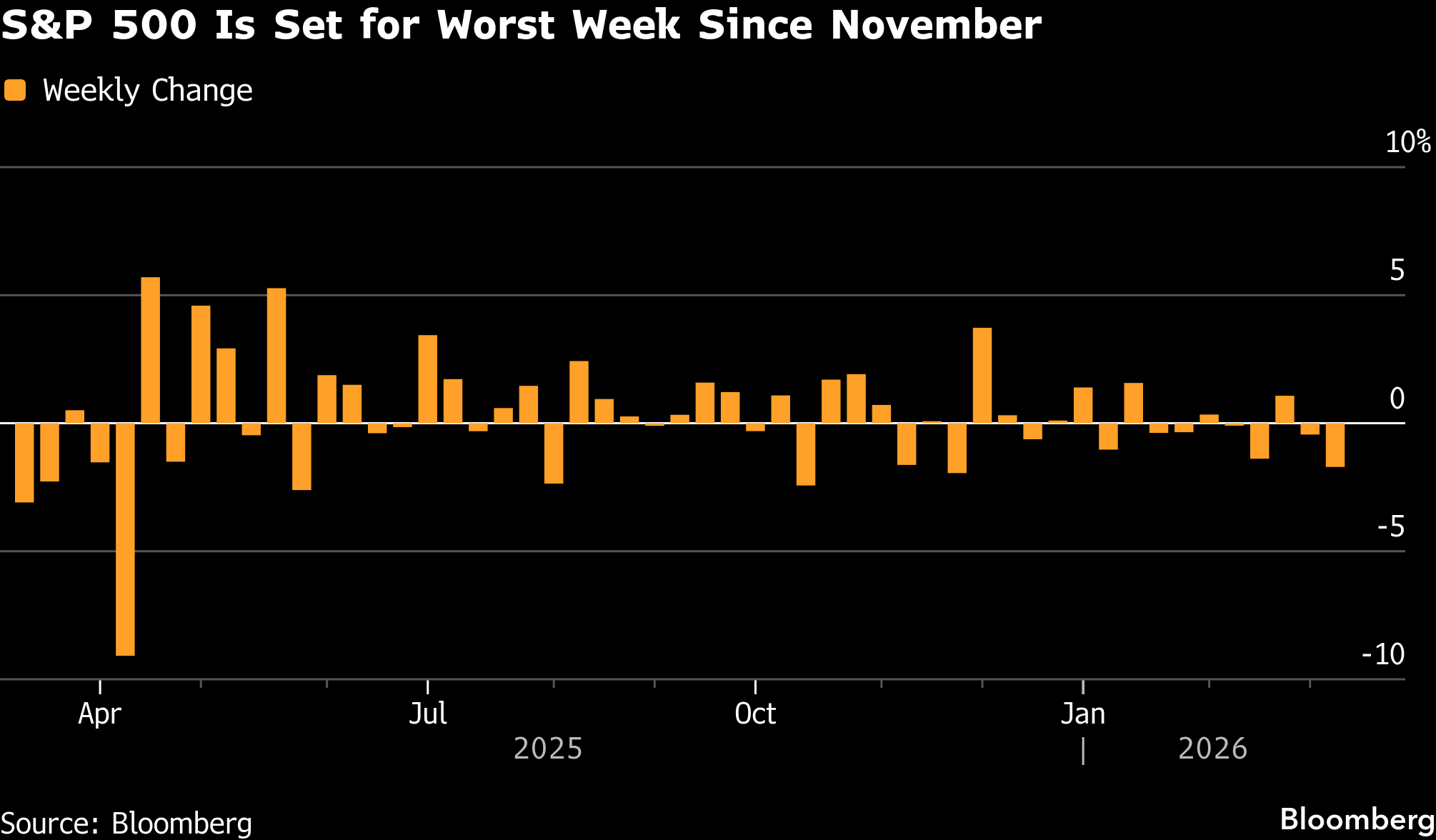
The S&P 500 lost about 1%, heading toward its worst week since November. Financial shares sank, with BlackRock Inc. down 7.5% after curbing withdrawals from a private-credit fund. Oil topped $90. Treasuries rose, but were still set for their biggest weekly rout since President Donald Trump announced sweeping tariffs nearly a year ago. That’s even as traders slightly boosted bets on Federal Reserve rate cuts. Bitcoin sank below $69,000.
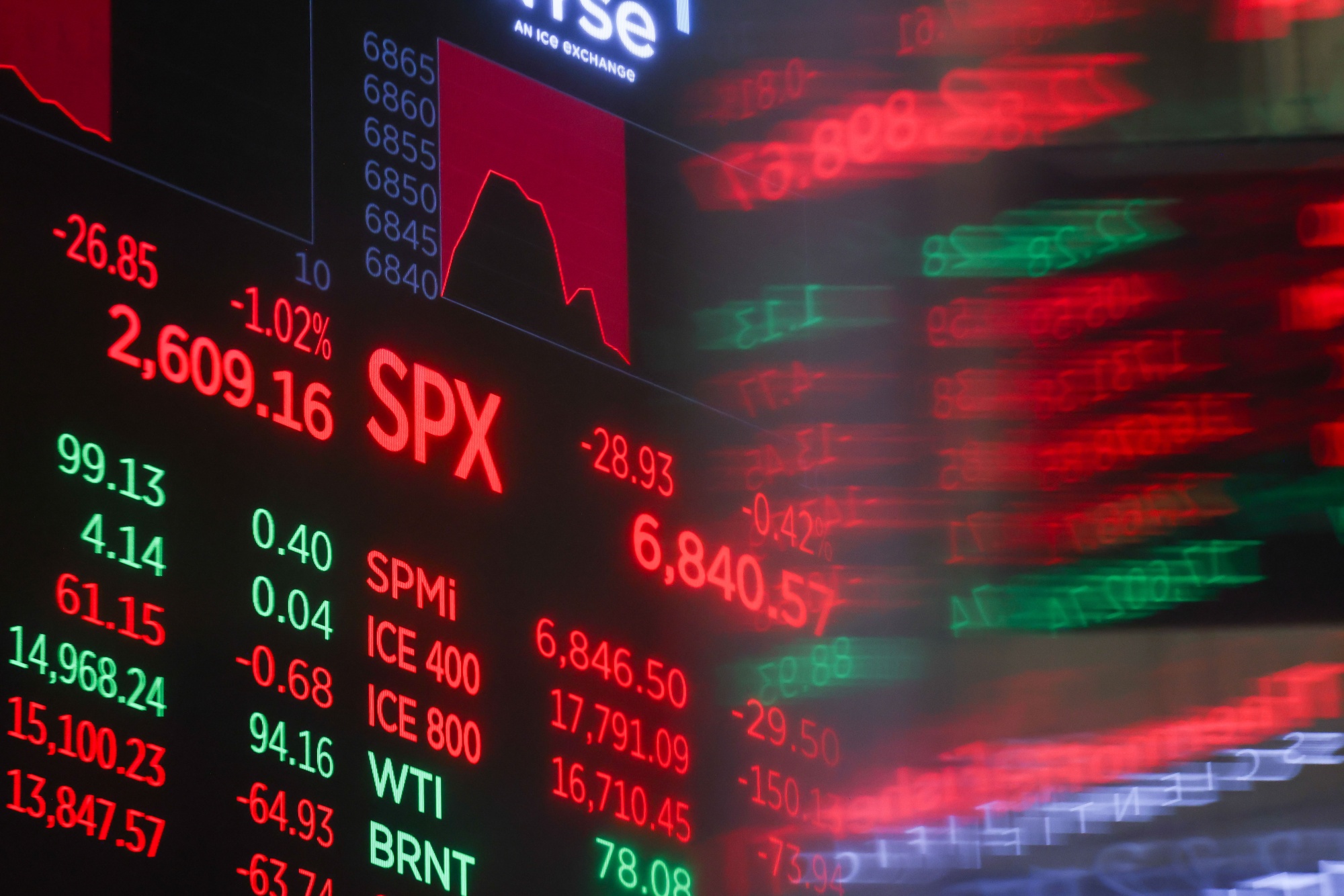
Nonfarm payrolls slid 92,000 last month after a strong start to the year. The drop was one of the largest since the pandemic, partly reflecting a decrease in health-care employment due to strike activity. The unemployment rate rose to 4.4%.
The figures could refocus the Fed’s attention on the jobs market as it assesses how long to hold rates steady. Policymakers have been more attuned to inflation lately — even before the war on Iran sparked concerns about price pressures.
A negative payrolls number combined with a jump in oil prices will have traders worrying about stagflation risks, according to Brian Jacobsen at Annex Wealth Management.
“Today’s numbers may have put the Fed between a rock and a hard place,” said Ellen Zentner at Morgan Stanley Wealth Management. “Significant weakening in the labor market would support a rate cut, but given the risk that higher-for-longer oil prices could trigger another inflation surge, the Fed may feel compelled to remain on the sidelines.”
With no sign of a let-up in hostilities in the Middle East, the conflict is unleashing a wave of disruption across energy markets, with shipping through the Strait of Hormuz at a near-total halt. Trump demanded Iran surrender as the war on the Islamic Republic raged for a seventh day.
About 400 shares in the S&P 500 fell. The yield on 10-year Treasuries slid three basis points to 4.11%.
Fed Governor Christopher Waller said on Bloomberg TV he doesn’t expect the Iran war to have a sustained impact on inflation. Meantime, Fed Bank of San Francisco President Mary Daly told CNBC that a disappointing employment report undermines the notion that the labor market was stabilizing.
While the jobs report precedes the Iran conflict, the spike in oil prices raises the probability of stronger energy inflation, according to Andy Schneider at BNP Paribas.
“Modest increases in oil prices, even if sustained, have transitory effects on US headline inflation and minimal effects on US core inflation,” said Michael Gapen at Morgan Stanley. “The Fed can look through these increases, but with inflation above target as long as it has been, even modest oil price pressures could delay rate cuts.”
Absent second-round effects or rising inflation expectations, he says Fed hikes have a high bar. A substantial rise in oil prices could weaken activity, acting like an uncertainty shock and putting rate cuts in play, Gapen noted.
If the labor market keeps losing steam, it becomes a more delicate backdrop — especially with geopolitical uncertainty on the rise and energy prices capable of acting as an added tax at the gas pump, according to Bret Kenwell at eToro.
“This may not change the Fed’s decision this month, but a visibly weakening jobs market is the kind of trend that can pull the Fed in a more dovish direction as 2026 unfolds,” he said. “Regardless of interest rates, a deteriorating jobs market is not what investors want to see.”
Corporate Highlights:
- Boeing Co. is closing in on one of the largest sales in its history, a 500-aircraft order for 737 Max jets set to be unveiled when Trump travels to Beijing for his first state visit to China since 2017, people familiar with the matter said.
- Marvell Technology Inc. delivered a bullish sales outlook, saying that data center demand was growing even faster than anticipated.
- Gap Inc. reported sales and profit that came in slightly below expectations as two of its apparel chains underperformed.
What Bloomberg strategists say...
“Inflation concerns stemming from higher oil prices — as a result of the Iran conflict — overwhelmed the prospect of further easing to support the economy. Following Friday’s data, growth worries are diluting some of that focus.” — Kristine Aquino, Managing Editor, Markets Live. For the full analysis, click here.
Some of the main moves in markets:
Stocks
- The S&P 500 fell 0.9% as of 1:24 p.m. New York time
- The Nasdaq 100 fell 0.8%
- The Dow Jones Industrial Average fell 1%
- The MSCI World Index fell 0.8%
Currencies
- The Bloomberg Dollar Spot Index fell 0.1%
- The euro was little changed at $1.1612
- The British pound rose 0.3% to $1.3393
- The Japanese yen was little changed at 157.67 per dollar
Cryptocurrencies
- Bitcoin fell 3.9% to $68,372.31
- Ether fell 5% to $1,976.76
Bonds
- The yield on 10-year Treasuries declined three basis points to 4.11%
- Germany’s 10-year yield advanced two basis points to 2.86%
- Britain’s 10-year yield advanced nine basis points to 4.63%
Commodities
- West Texas Intermediate crude rose 12% to $90.33 a barrel
- Spot gold rose 1.3% to $5,147.25 an ounce
©2026 Bloomberg L.P.